Acetabulum Iliac Force
Overview
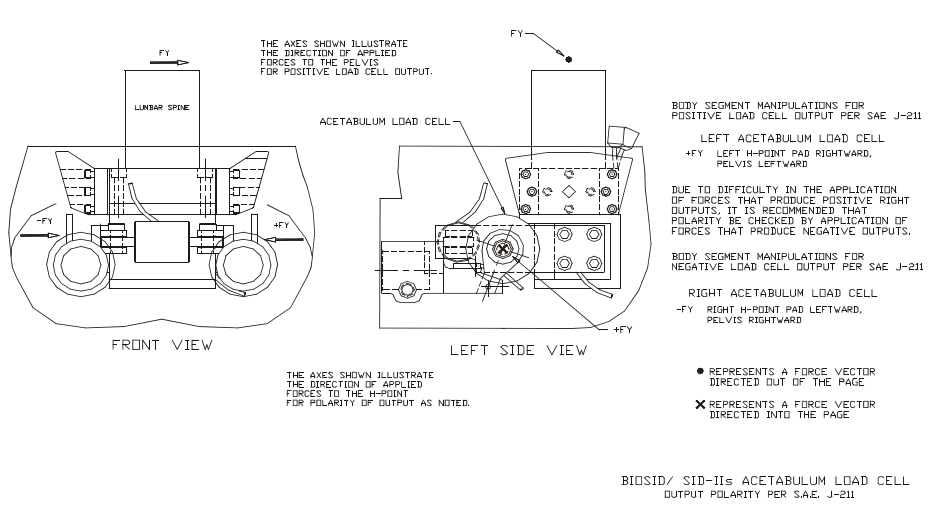
The acetabulum and iliac forces are measures of the SID-IIs and WorldSID test dummies that are compared injury assessment references values (IARV). These IARVs are determined for side impacts using Zhu et al. [1] and Bouquet et al. [2] that is outlined in the side impact guidelines [3].
Inputs
Signals:
- Pelvis Iliac Force (Y)
- Pelvis Acetabulum Force (Y)
Calculation
- Filter the acetabulum and iliac signals (CFC = 600)
- Find the maximum of each signal
Injury Criteria
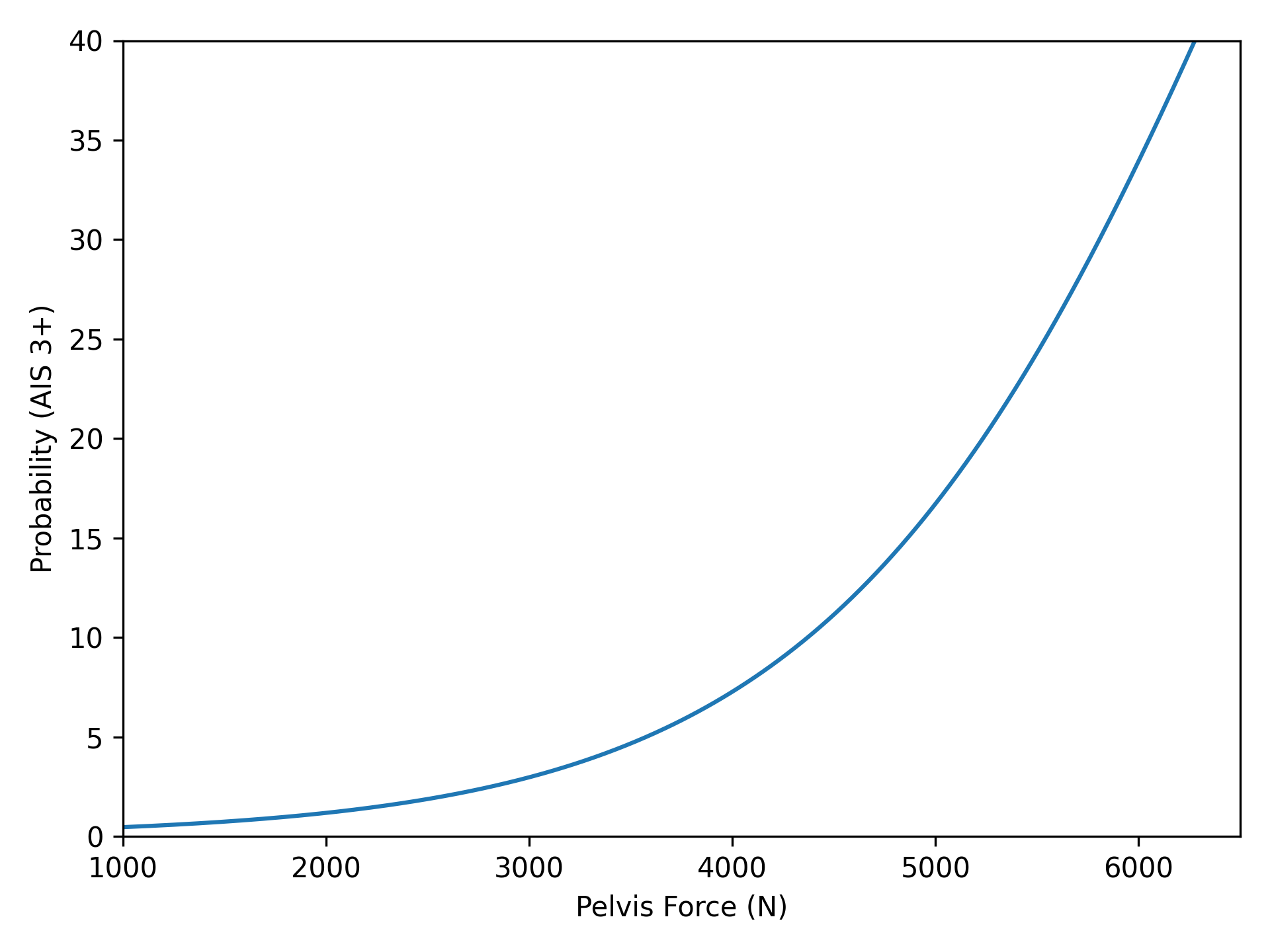
The acetabulum iliac force injury criteria is 5525 N for the SID-II. [4]
NCAP Combined Injury Rating
The acetabulum iliac metric is used in the NCAP side pole and side MDB tests for the SID-II dummy.
References
[1] Zhu, J. Y., J. M. Cavanaugh, and A. I. King. Pelvic biomechanical response and padding benefits in side impact based on a cadaveric test series. No. 933128. SAE Technical Paper, 1993.
[2] Bouquet, Robert, et al. "Pelvis human response to lateral impact." Proceedings of the 16th International Technical Conference on the Enhanced Safety of Vehicles, Windsor, ON, Canada. Vol. 31. 1998.
[3] "Sign Convention for Vehicle Crash Testing" No. J1733-2018-11 SAE International. SAE Technical Report, 2018.
[4] Federal Motor Vehicle Safety Standard 49 CFR § 571.214; Side impact protection.
[5] National Highway Traffic Safety Administration. Final Rule; Response to Petitions for Reconsideration: Federal Motor Vehicle Safety Standards; Head Restraints. Docket No. NHTSA-2006-26555-0120, U.S. Department of Transportation, 2006.