Neck Injury Criterion (Nij)
Description
The Neck Injury Criterion (Nij) is an injury metric used to evaluate the risk of cervical spine injury during automotive crashes. The criterion is intended to capture the combined effects of axial neck loading and sagittal-plane bending moment at the upper neck. Nij was developed by the National Highway Traffic Safety Administration (NHTSA) as part of an effort to improve injury criteria for advanced occupant restraint systems, including advanced airbag systems, and is used in frontal crash assessment procedures such as Federal Motor Vehicle Safety Standard (FMVSS) No. 208 and related crash-test protocols [1] [3].
When this feature is available
The Nij metric becomes available when either the current curve selection or any loaded test contains a neck measurement set that meets the requirements. Only channels with a usable data status count.
The required measurement set includes:
- The occupant must not be a
EUROSIDdummy. - If the occupant is a
THORdummy, the signal attachment must not beNECK - LOWER. - The group must contain all of the following signals at the same neck location:
- Axis:
Z - LOCAL, Units:NEWTONS - Axis:
Y - LOCAL, UnitsNEWTON-METERS
- Axis:
- The neck location may be either
NECK - UPPERorNECK - LOWER, subject to theTHORlower-neck exclusion above. - If
Apply Moment Correctionis enabled, the same group must also contain:Force,X - LOCAL, unitsNEWTONS
This means WebSAT checks each occupant and neck location independently and enables Nij if any eligible measurement set satisfies the required signal logic.
Settings
| App setting | Default | Effect |
|---|---|---|
Apply Filter | True | Filters the force and moment signals before Nij is calculated |
Apply Moment Correction | True | Applies upper- or lower-neck moment correction when an X-axis neck-force measurement is available |
Out of Position Test | False | Switches the ATD lookup to out-of-position critical values |
Settings notes:
Apply Moment Correctiononly affects the result when an X-axis neck-force measurement is available.Out of Position Testdoes not just change labels; it changes the critical force and moment intercepts used in the Nij equation.
How WebSAT processes the data
- Validate the required neck measurements. WebSAT excludes EuroSID occupants and lower-neck THOR measurements. For each remaining neck location, WebSAT requires a local Z-axis force and a local Y-axis moment. If
Apply Moment Correctionis enabled, WebSAT also requires a local X-axis force at the same location. - Convert the signals to standard units:
force in
N, moment inN*m, time ins. - Look up the ATD using the selected dummy type, size, sex, and the
Out of Position Teststate. - Pull the matching critical intercepts for the chosen neck location: tension, compression, flexion, and extension.
- If
Apply Filteris enabled, filter the channels before the Nij calculation. WebSAT usesCFC 600for the neck moment and, in the standard path,CFC 600for the relevant neck force channels as well. - If
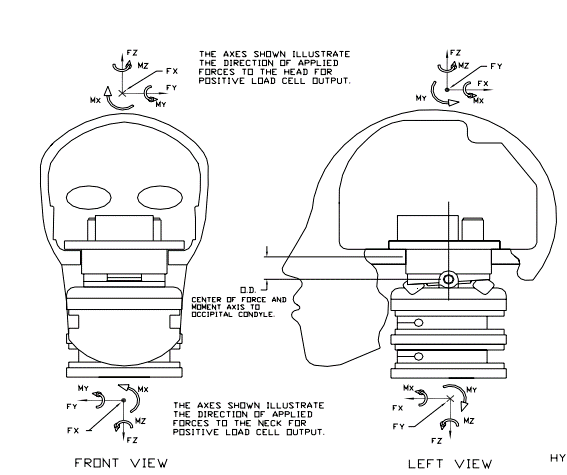
Apply Moment Correctionis enabled and an X-axis neck-force measurement is available, correct the Y-axis moment using the neck load-cell correction relationships described by SAE J1733 [5]:
For the upper neck:
The distance is the offset from the load cell to the occipital condyle for the selected ATD.
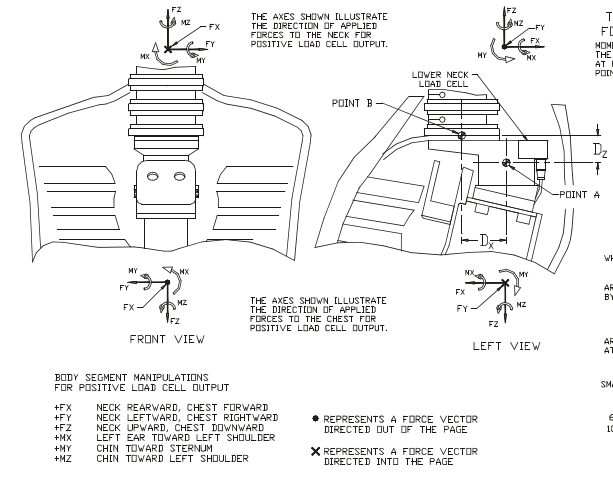
For the lower neck:
The distances and are the lower-neck load-cell offsets for the selected ATD.
- Split the force and moment into the four polarity permutations:
Ntf: tension + flexionNte: tension + extensionNcf: compression + flexionNce: compression + extension
- Compute Nij for each loading mode:
- At each time step, keep only the loading mode that contributes the maximum Nij value.
- Report the overall Nij peak, the time of that peak, the four mode curves, and the associated force and moment values.
- If the ATD supports it, evaluate the injury risk functions for the calculated Nij value.
Reference values and injury risk
Critical intercepts
Nij uses ATD-specific force and moment intercepts rather than one universal limit. WebSAT selects:
- Upper-neck intercepts when the signal attachment is
NECK - UPPER - Lower-neck intercepts when the signal attachment is
NECK - LOWER - Out-of-position intercepts when
Out of Position Testis enabled
The full intercept tables are shown below. These values come from the cited ATD injury-criteria references, including Mertz reference values and NHTSA THOR criteria [2] [4].
Upper neck critical intercepts, in position
| ATD | Tension intercept (N) | Compression intercept (N) | Flexion intercept (N*m) | Extension intercept (N*m) |
|---|---|---|---|---|
| HIII 95th male | 8180 | -7480 | 405 | -177 |
| HIII 50th male | 6806 | -6160 | 310 | -135 |
| HIII 5th female | 4287 | -3880 | 155 | -67 |
| HIII 10 year old | 3710 | -3390 | 125 | -54.8 |
| HIII 6 year old | 3080 | -2820 | 96 | -42 |
| HIII 3 year old | 2330 | -2130 | 67 | -29.3 |
| CRABI 18 month | 1760 | -1610 | 46.8 | -20.4 |
| CRABI 12 month | 1610 | -1470 | 42.5 | -18.6 |
| CRABI 6 month | 1510 | -1380 | 39.5 | -17.3 |
| THOR 50th male | 4200 | -4520 | 60 | -79.2 |
| THOR 5th female | 4200 | -6400 | 88.1 | -117 |
| SID-IIs 5th female | 4260 | -3900 | 153 | -66.9 |
| BioSID 50th male | 7480 | -7480 | 405 | -162 |
| EuroSID-2re 50th male | 3900 | -3900 | 153 | -61.2 |
| WorldSID 50th male | 3900 | -3900 | 153 | -61.2 |
| WorldSID 5th female | 4260 | -3900 | 153 | -66.9 |
Upper neck critical intercepts, out of position
| ATD | Tension intercept (N) | Compression intercept (N) | Flexion intercept (N*m) | Extension intercept (N*m) |
|---|---|---|---|---|
| HIII 95th male | 7480 | -7480 | 405 | -162 |
| HIII 50th male | 6200 | -6200 | 305 | -122 |
| HIII 5th female | 3880 | -3880 | 155 | -61 |
| HIII 10 year old | 3390 | -3390 | 125 | -50.1 |
| HIII 6 year old | 2820 | -2820 | 96 | -38.4 |
| HIII 3 year old | 2130 | -2130 | 67 | -26.8 |
| CRABI 18 month | 1610 | -1610 | 46.8 | -18.7 |
| CRABI 12 month | 1470 | -1470 | 42.5 | -17 |
| CRABI 6 month | 1380 | -1380 | 39.5 | -15.8 |
| SID-IIs 5th female | 3900 | -3900 | 153 | -61.2 |
| BioSID 50th male | 7480 | -7480 | 405 | -162 |
| EuroSID-2re 50th male | 3900 | -3900 | 153 | -61.2 |
| WorldSID 50th male | 3900 | -3900 | 153 | -61.2 |
| WorldSID 5th female | 4260 | -3900 | 153 | -66.9 |
Lower neck critical intercepts, in position
| ATD | Tension intercept (N) | Compression intercept (N) | Flexion intercept (N*m) | Extension intercept (N*m) |
|---|---|---|---|---|
| HIII 95th male | 8180 | -7480 | 810 | -354 |
| HIII 50th male | 6780 | -6200 | 610 | -266 |
| HIII 5th female | 4260 | -3900 | 306 | -134 |
| HIII 10 year old | 3710 | -3390 | 250 | -110 |
| HIII 6 year old | 3080 | -2820 | 192 | -84 |
| HIII 3 year old | 2330 | -2130 | 134 | -58.6 |
| CRABI 18 month | 1760 | -1610 | 93.6 | -40.8 |
| CRABI 12 month | 1610 | -1470 | 85 | -37.2 |
| CRABI 6 month | 1510 | -1380 | 79 | -34.6 |
| THOR 50th male | 4200 | -6400 | 88.1 | -117 |
| THOR 5th female | 4200 | -6400 | 88.1 | -117 |
| SID-IIs 5th female | 4260 | -3900 | 306 | -134 |
| BioSID 50th male | 6780 | -6200 | 610 | -266 |
| EuroSID-2re 50th male | 3900 | -3900 | 306 | -122 |
| WorldSID 50th male | 3900 | -3900 | 306 | -122 |
| WorldSID 5th female | 4260 | -3900 | 306 | -134 |
Lower neck critical intercepts, out of position
| ATD | Tension intercept (N) | Compression intercept (N) | Flexion intercept (N*m) | Extension intercept (N*m) |
|---|---|---|---|---|
| HIII 95th male | 7480 | -7480 | 810 | -324 |
| HIII 50th male | 6200 | -6200 | 610 | -244 |
| HIII 5th female | 3900 | -3900 | 306 | -122 |
| HIII 10 year old | 3390 | -3390 | 250 | -100 |
| HIII 6 year old | 2820 | -2820 | 192 | -76.8 |
| HIII 3 year old | 2130 | -2130 | 134 | -53.6 |
| CRABI 18 month | 1610 | -1610 | 93.6 | -37.4 |
| CRABI 12 month | 1470 | -1470 | 85 | -34 |
| CRABI 6 month | 1380 | -1380 | 79 | -31.6 |
| SID-IIs 5th female | 3900 | -3900 | 306 | -122 |
| BioSID 50th male | 6780 | -6200 | 610 | -244 |
| EuroSID-2re 50th male | 3900 | -3900 | 306 | -122 |
| WorldSID 50th male | 3900 | -3900 | 306 | -122 |
| WorldSID 5th female | 4260 | -3900 | 306 | -134 |
Injury reference values
WebSAT also shows ATD-specific neck injury assessment reference values when they are available. A dash in the tables means that WebSAT does not have that value for the ATD.
Upper neck limits, in position
| ATD | Tension limit (N) | Compression limit (N) | Flexion limit (N*m) | Extension limit (N*m) |
|---|---|---|---|---|
| HIII 95th male | 5030 | -4830 | 252 | -128 |
| HIII 50th male | 4170 | -4000 | 190 | -97 |
| HIII 5th female | 2620 | -2520 | 95 | -49 |
| HIII 10 year old | 2290 | -2200 | 125 | -40 |
| HIII 6 year old | 1490 | -1820 | 60 | -30 |
| HIII 3 year old | 1130 | -1380 | 42 | -21 |
| CRABI 18 month | 1080 | -1040 | 29 | -15 |
| CRABI 12 month | 990 | -960 | 27 | -14 |
| CRABI 6 month | 930 | -890 | 25 | -13 |
| THOR 50th male | — | — | — | — |
| THOR 5th female | 4170 | -4000 | 88.1 | -94 |
| SID-IIs 5th female | 2620 | -2520 | 95 | -49 |
| BioSID 50th male | — | — | — | — |
| EuroSID-2re 50th male | — | — | — | — |
| WorldSID 50th male | — | — | — | — |
| WorldSID 5th female | — | — | — | — |
Upper neck limits, out of position
| ATD | Tension limit (N) | Compression limit (N) | Flexion limit (N*m) | Extension limit (N*m) |
|---|---|---|---|---|
| HIII 95th male | 3970 | -4830 | 252 | -103 |
| HIII 50th male | 3300 | -4000 | 190 | -57 |
| HIII 5th female | 2070 | -2520 | 95 | -39 |
| HIII 10 year old | 1800 | -2200 | 78 | -32 |
| HIII 6 year old | 1490 | -1820 | 60 | -24 |
| HIII 3 year old | 1130 | -1380 | 42 | -17 |
| CRABI 18 month | 850 | -1040 | 29 | -12 |
| CRABI 12 month | 780 | -960 | 27 | -11 |
| CRABI 6 month | 730 | -890 | 25 | -10 |
| THOR 50th male | — | — | — | — |
| THOR 5th female | 4170 | -4000 | 88.1 | -94 |
| SID-IIs 5th female | 2070 | -2520 | 95 | -39 |
| BioSID 50th male | — | — | — | — |
| EuroSID-2re 50th male | — | — | — | — |
| WorldSID 50th male | — | — | — | — |
| WorldSID 5th female | — | — | — | — |
Lower neck limits, in position
| ATD | Tension limit (N) | Compression limit (N) | Flexion limit (N*m) | Extension limit (N*m) |
|---|---|---|---|---|
| HIII 95th male | 5030 | -4830 | 504 | -256 |
| HIII 50th male | 4170 | -4000 | 380 | -194 |
| HIII 5th female | 2620 | -2520 | 190 | -98 |
| HIII 10 year old | 2290 | -2200 | 156 | -80 |
| HIII 6 year old | 1890 | -1820 | 120 | -60 |
| HIII 3 year old | 1430 | -1380 | 84 | -42 |
| CRABI 18 month | 1080 | -1040 | 58 | -30 |
| CRABI 12 month | 990 | -960 | 54 | -28 |
| CRABI 6 month | 930 | -890 | 50 | -26 |
| THOR 50th male | — | — | — | — |
| THOR 5th female | 4170 | -4000 | 88.1 | -94 |
| SID-IIs 5th female | 2620 | -2520 | 190 | -98 |
| BioSID 50th male | — | — | — | — |
| EuroSID-2re 50th male | — | — | — | — |
| WorldSID 50th male | — | — | — | — |
| WorldSID 5th female | — | — | — | — |
Lower neck limits, out of position
| ATD | Tension limit (N) | Compression limit (N) | Flexion limit (N*m) | Extension limit (N*m) |
|---|---|---|---|---|
| HIII 95th male | 3970 | -4830 | 504 | -206 |
| HIII 50th male | 3290 | -4000 | 380 | -156 |
| HIII 5th female | 2070 | -2520 | 190 | -78 |
| HIII 10 year old | 1800 | -2200 | 156 | -64 |
| HIII 6 year old | 1490 | -1820 | 120 | -48 |
| HIII 3 year old | 1130 | -1380 | 84 | -34 |
| CRABI 18 month | 850 | -1040 | 58 | -24 |
| CRABI 12 month | 780 | -960 | 54 | -22 |
| CRABI 6 month | 730 | -890 | 50 | -20 |
| THOR 50th male | — | — | — | — |
| THOR 5th female | 4170 | -4000 | 88.1 | -94 |
| SID-IIs 5th female | 2070 | -2520 | 190 | -78 |
| BioSID 50th male | — | — | — | — |
| EuroSID-2re 50th male | — | — | — | — |
| WorldSID 50th male | — | — | — | — |
| WorldSID 5th female | — | — | — | — |
For a THOR occupant, WebSAT calculates the AIS 2+ and AIS 3+ probabilities from the calculated Nij value [4]:
Results
The summary table and plots below show how Nij outputs are presented in WebSAT:

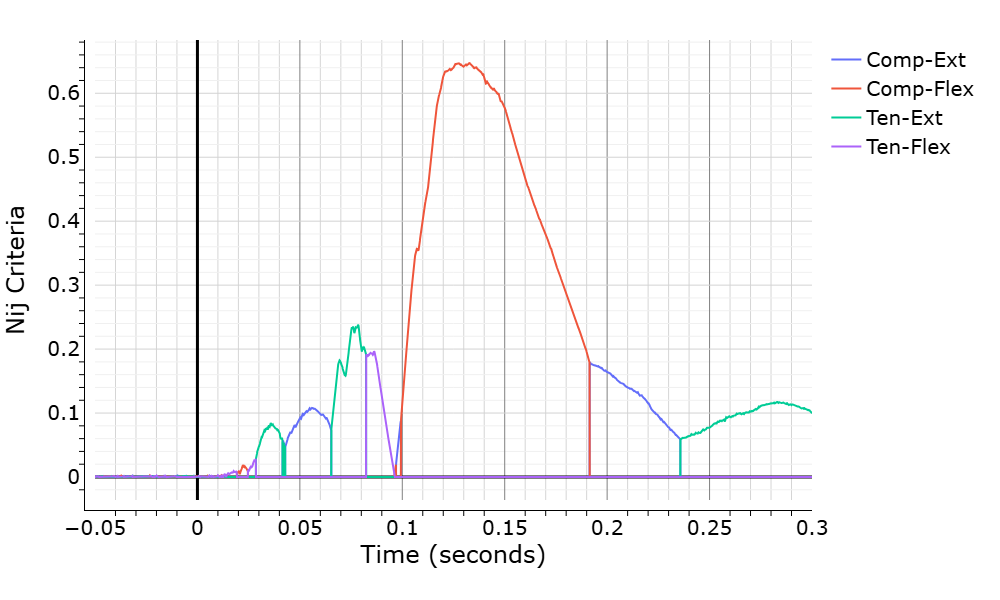
This plot shows the Nij response separated into the four standard loading modes: tension-extension, tension-flexion, compression-extension, and compression-flexion. It helps the user see which loading combination is governing and when the peak Nij value occurs during the event.
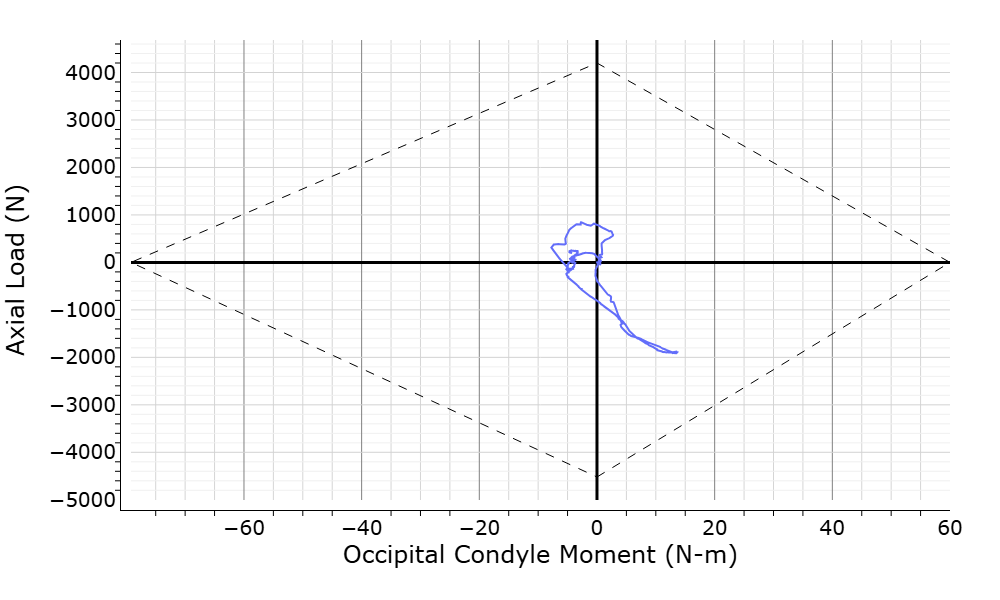
This kite plot shows the combined axial force and bending moment response relative to the ATD-specific Nij interaction envelope. It helps the user understand whether the result is being driven mainly by axial load, bending moment, or their combined interaction as the trace approaches the boundary.
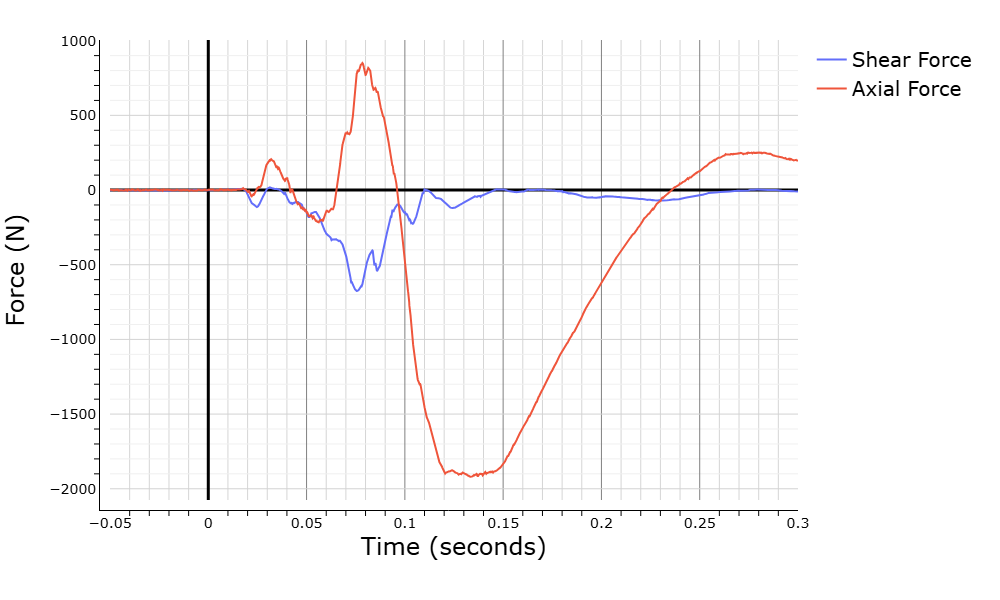
This force plot provides supporting context for the Nij calculation by showing the neck force response over time. It helps the user check the timing, polarity, and magnitude of the axial force signal, which is one of the two primary inputs used in the Nij equation.
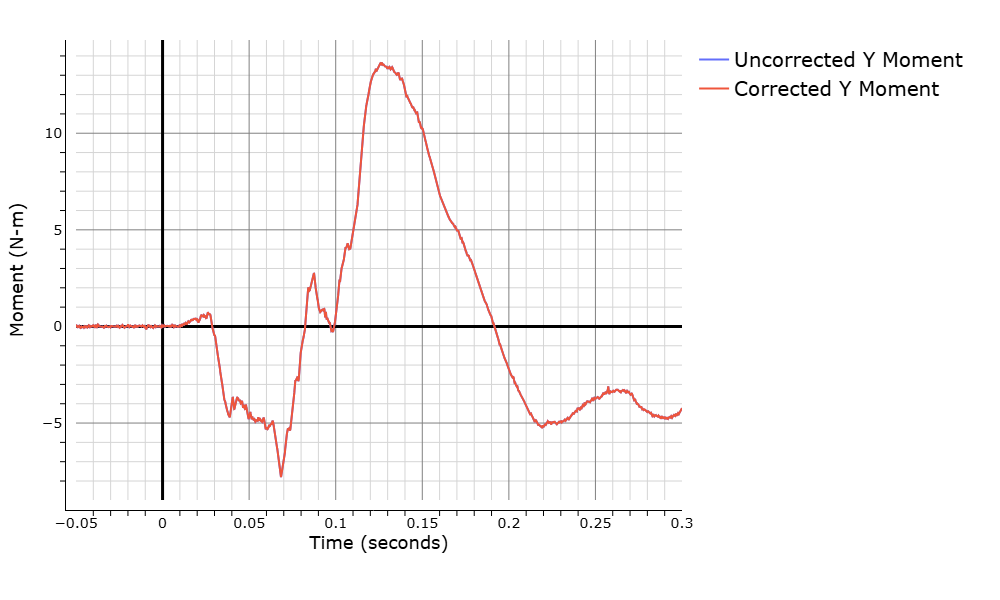
This moment plot provides supporting context for the bending component of Nij by showing the neck moment response over time. It helps the user compare the corrected occipital-condyle moment against the raw load-cell moment and confirm that the final Nij calculation is based on the corrected signal when applicable.
References
[1] Kleinberger, M. et al. "Development of Improved Injury Criteria for the Assessment of Advanced Automotive Restraint Systems." National Highway Traffic Safety Administration, 1998.
[2] Mertz, H. J., Irwin, A. L., and Prasad, P. “Biomechanical and Scaling Bases for Frontal and Side Impact Injury Assessment Reference Values.” Stapp Car Crash Journal, 47, 2003, pp. 155–188. SAE Technical Paper 2003-22-0009.
[3] National Highway Traffic Safety Administration. "Federal Motor Vehicle Safety Standards; Occupant Crash Protection; Final Rule." Federal Register, 65(208), 2000.
[4] Craig, M., et al. "Injury Criteria for the THOR 50th Male ATD." National Highway Traffic Safety Administration, 2020.
[5] SAE International. SAE J1733: Sign Convention for Vehicle Crash Testing. 2013.