Resultant
Description
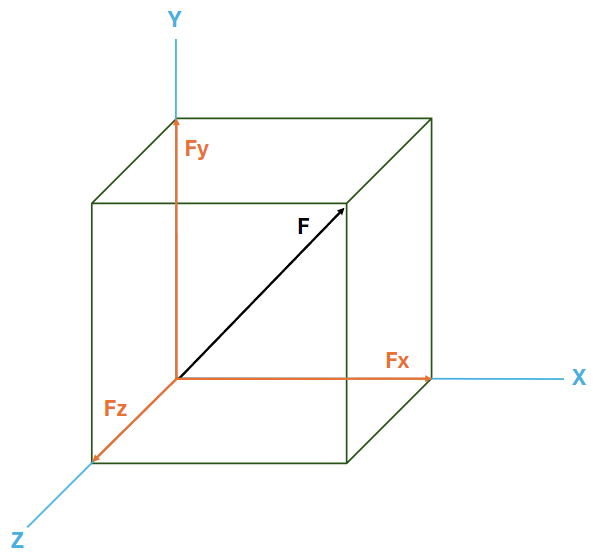
Resultant combines selected component curves into a single magnitude curve. It is commonly used for orthogonal X, Y, and Z measurements.
When this feature is available
Resultant becomes available when the selected curves meet the requirements.
For the selection to pass:
- At least two curves must be selected.
The button becomes available as soon as two or more curves are selected. The calculation supports two or three component curves with matching time samples. Select curves that already use the same units because the calculation uses their numeric values directly.
Settings
This feature has no settings.
How WebSAT processes the data
- Load two or three selected component curves.
- Reject the operation if their time samples do not match.
- Calculate the root-sum-square magnitude at every time sample. For three curves:
- Create and display the resultant curve with the first curve's units and time axis.
Results
The operation produces one new selected curve. A resultant is nonnegative and does not retain component polarity.
References
No injury criterion or external reference value is applied.