Pubic Symphysis Force
Description
Lateral force measured at the pubic symphysis refers to the forces acting on either side of the pubic symphysis during a car crash [1]. High levels of laterally applied force to the pubic symphysis can result in pelvic fractures, internal bleeding, or lumbar spine damage [2]. WebSAT uses the peak force to calculate the NCAP pelvis-injury risk.
This metric does not have a separate button. WebSAT reports the driver's pubic-symphysis force and pelvis-injury risk when you select Vehicle Analysis > NCAP for a supported side moving-deformable-barrier test.
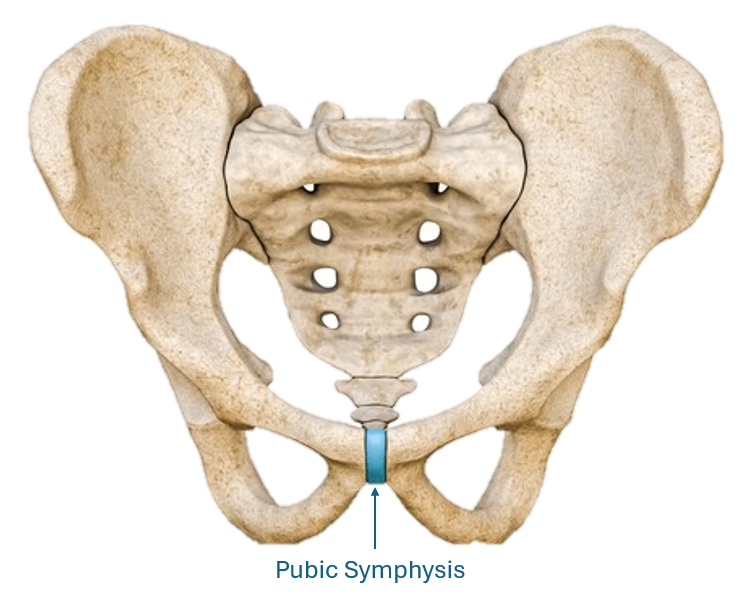
Measurements used by WebSAT
- Force at the Pubic Symphysis (Y)
How WebSAT processes the data
- Convert the pubic symphysis force to newtons (N) (if applicable)
- Filter the pubic symphysis force (CFC 600)
- Signal is truncated to start at 0 seconds (if applicable)
- Find the maximum absolute filtered force
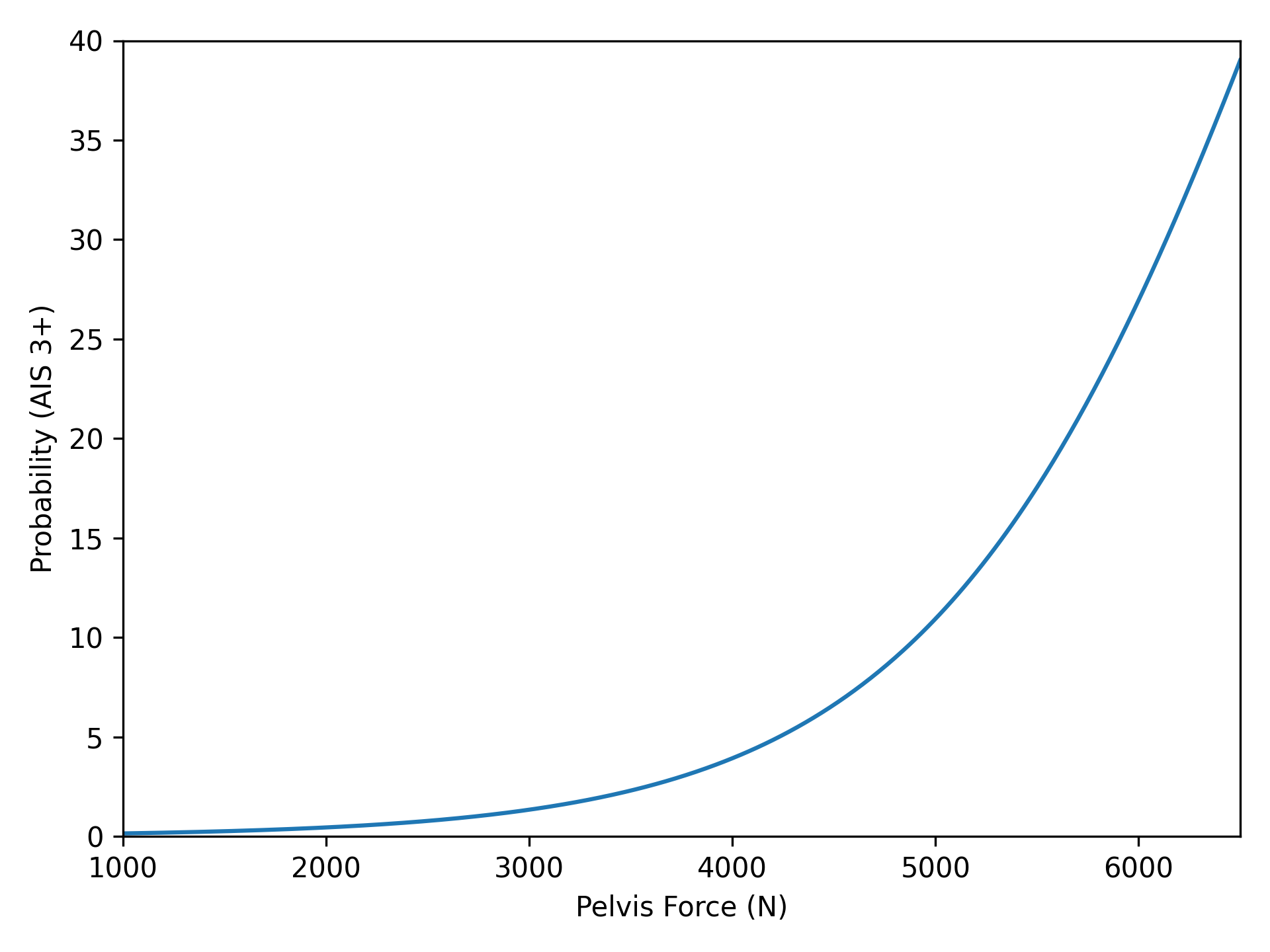
- Use the peak force to calculate the NCAP AIS 3+ pelvis-injury risk.
NCAP injury risk
The pelvis force metric for ES-2re is used for the driver in the NCAP side moving-deformable-barrier test. NHTSA defines the AIS 3+ pelvic-injury risk relationship as follows [4]:
References
[1] Leport, T., Baudrit, P., Trosseille, X., Petit, P., Palisson, A., & Vallancien, G. (2007). Assessment of the pubic force as a pelvic injury criterion in side impact. SAE Technical Paper 2007-22-0019.
[2] Tile, M., Helfet, D., & Kellam, J. (2003). Fractures of the Pelvis and Acetabulum.
[3] Federal Motor Vehicle Safety Standard 49 CFR § 571.214; Side impact protection.
[4] National Highway Traffic Safety Administration. New Car Assessment Program; Suggested Approaches for Enhancements. 73 FR 40016, July 11, 2008, Appendix D.